
江戸時代、大衆文化として親しまれた浮世絵が、時を経て美術品として評価されている。
その変化に着目し、現代の服飾文化もまた、未来において価値ある美術作品になり得るのではないかと考えた。
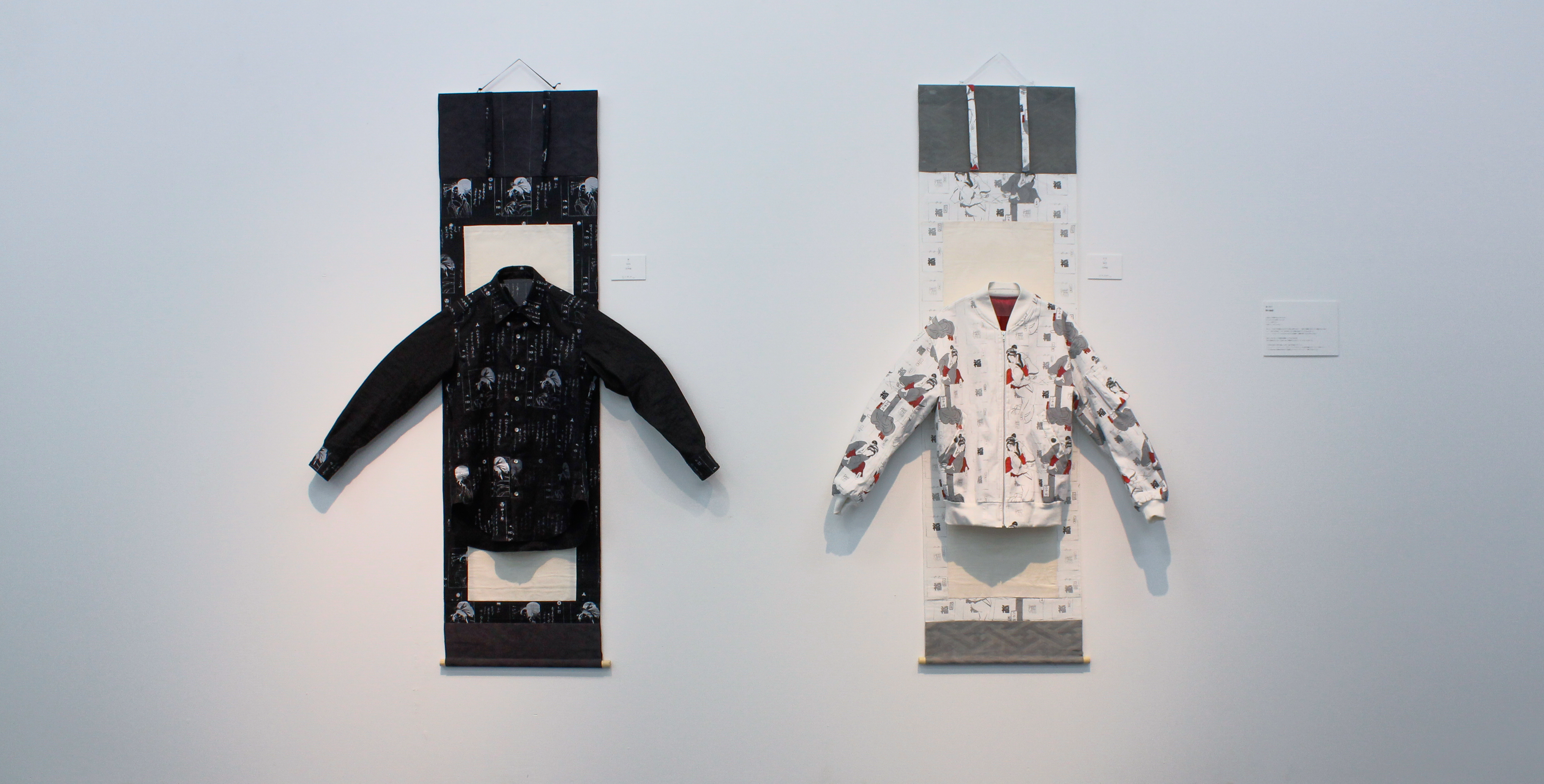
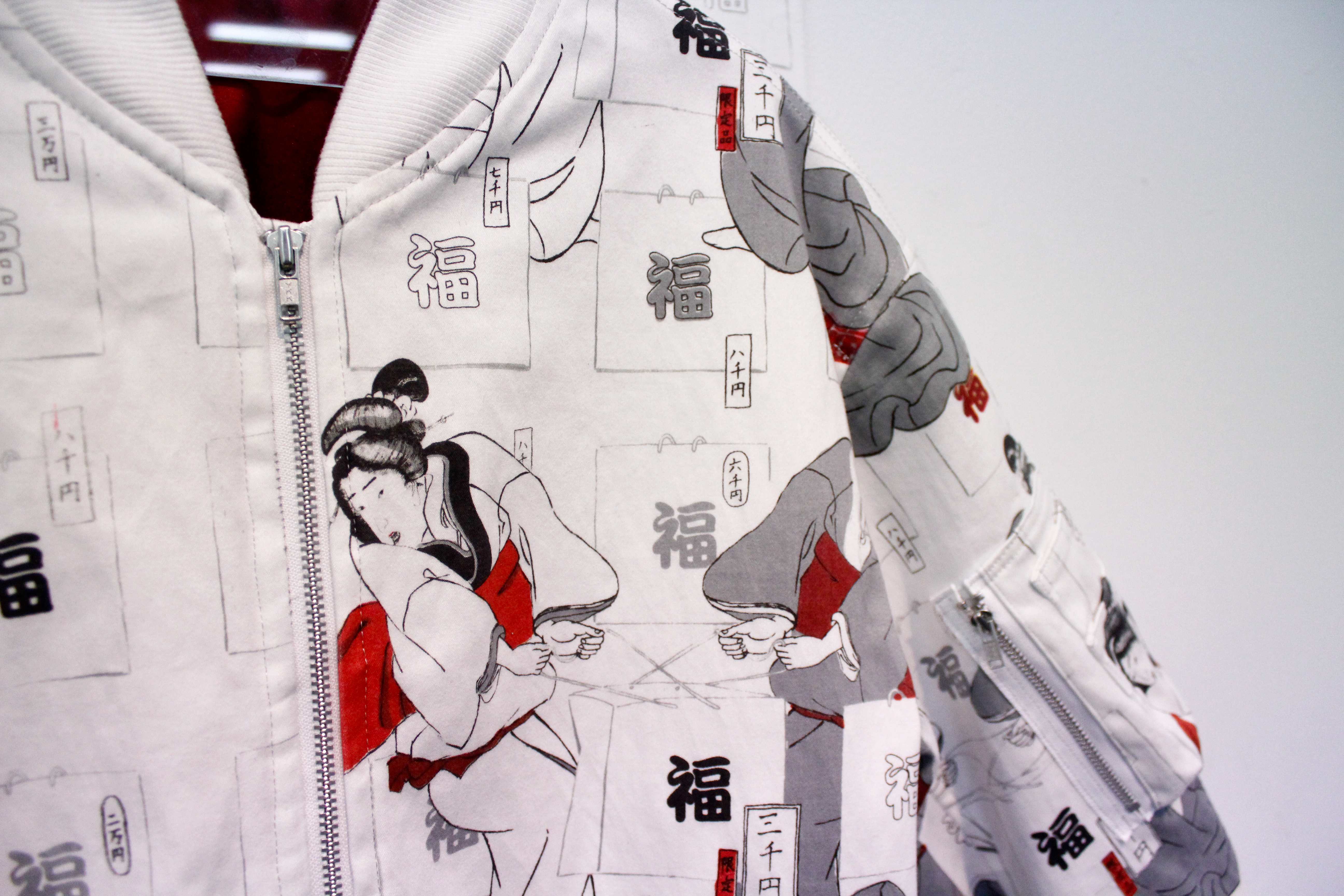
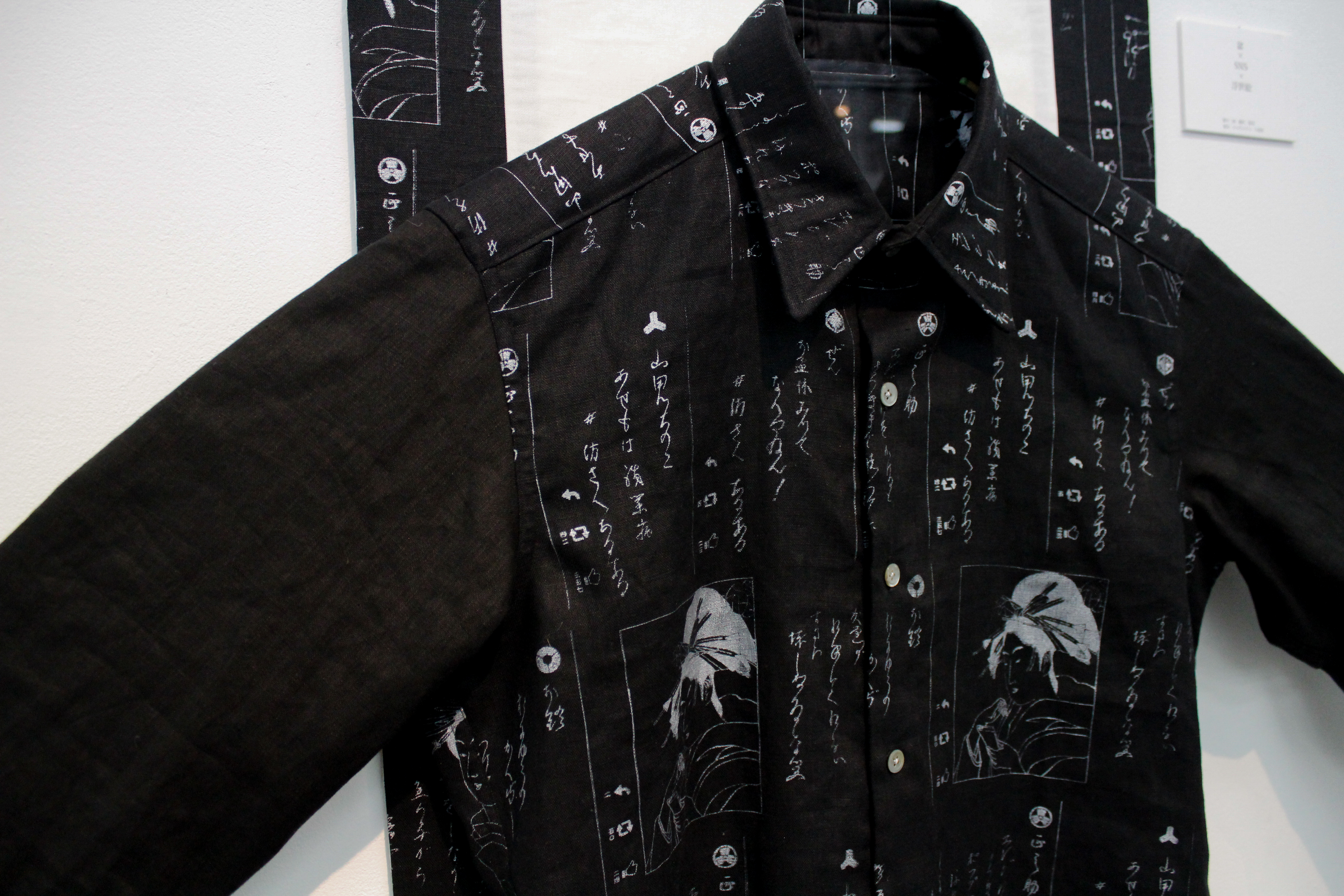
現代の「正月」と「盆」の風景を浮世絵として描き起こし、シルクスクリーンで衣服に手刷りした。
本来は日常の中で身につけ、やがてクローゼットに収まる衣服を、掛け軸に見立てて展示することで、ファッションと美術の境界を問い直した。
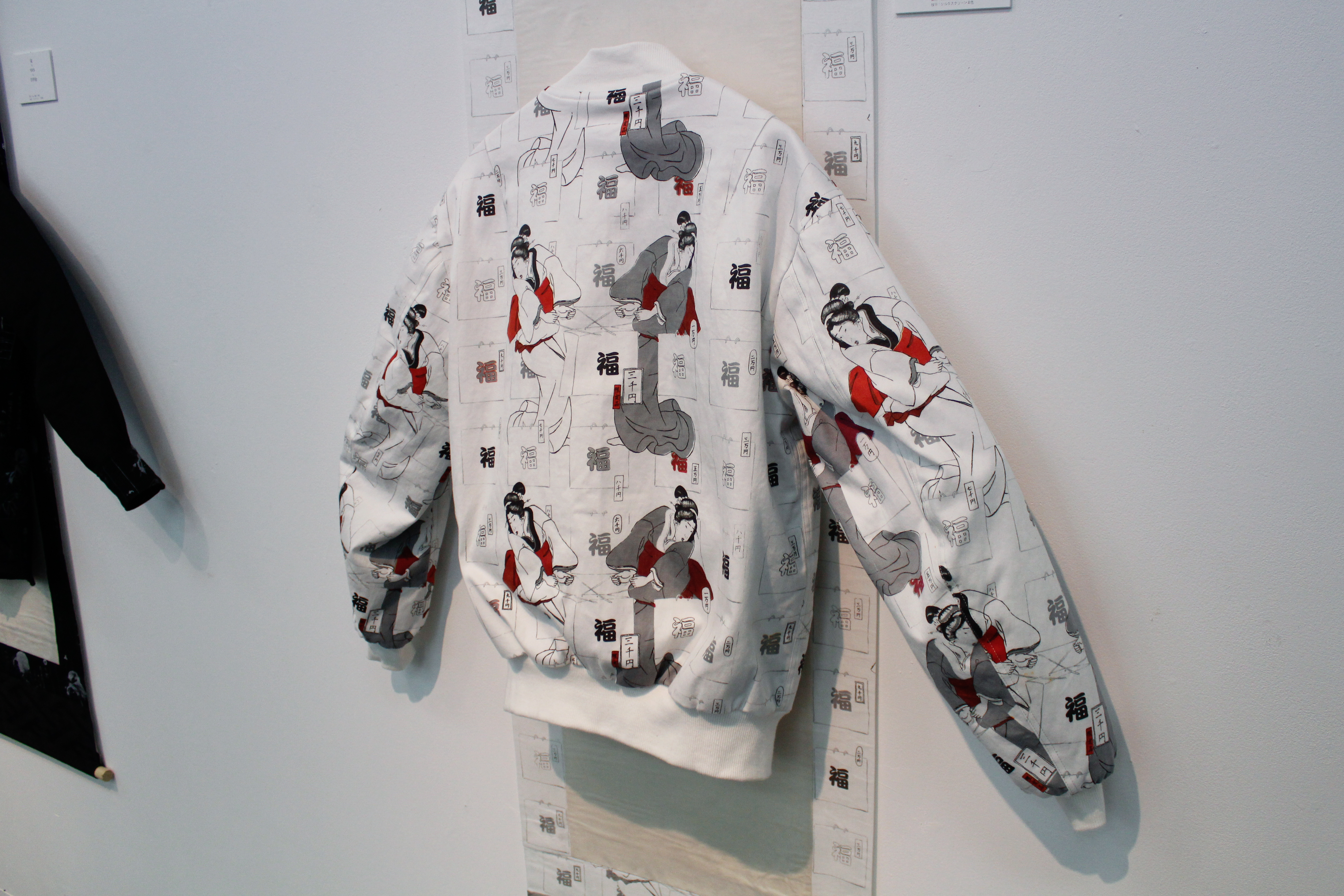
「正月」では、福袋をめぐって競い合う人々の姿を描き、中綿入りのジャケットに仕立てた。
「盆」では、SNSにお盆の愚痴を投稿する僧侶など、現代ならではの風景を描写。スマートフォンの発光感を雲母で表現し、麻素材のシャツに仕立てた。
日常着と祝祭、美術と大衆文化。時代とともに価値が変化するものの境界を揺さぶりながら、現代の服飾文化が未来に残すことのできる新たな価値を提示した。
「正月」
素材 | 綿、ポリエステル(裏地)
染色 | シルクスクリーン(反応性染料)
「盆」
素材 | 麻、ボタン(白蝶貝)
染色 | シルクスクリーン(顔料)、雲母
Ukiyo-e, which was beloved as popular culture during the Edo period, has come to be valued as works of art over time. Focusing on this shift, I wondered whether contemporary fashion culture might also become valuable works of art in the future.
I recreated scenes from modern-day “New Year’s” and “Obon” as ukiyo-e prints and hand-screen-printed them onto garments using silk-screen printing. By displaying these garments—which are typically worn in daily life and eventually stored in a closet—as if they were hanging scrolls, I sought to reexamine the boundary between fashion and art.
In “New Year’s,” I depicted people competing for lucky bags and crafted the design into a padded jacket. In “Obon,” I depicted scenes unique to the modern era, such as a monk posting complaints about Obon on social media. I used mica to represent the glow of a smartphone screen and tailored the design into a linen shirt.
Everyday wear and festivals; fine art and popular culture. By challenging the boundaries of things whose value changes with the times, I presented new value that contemporary fashion culture can leave for the future.
“New Year”
Material | Cotton, Polyester (lining)
Dyeing | Silk screen (reactive dye)
“Bon Festival”
Material | Linen, Buttons (white mother-of-pearl)
Dyeing | Silk screen (pigment), Mica