
2020年、新型コロナウイルスの感染拡大により、人との接触を避け、外出を控える生活が続いた。
これまで当たり前だった人とのふれあいや、何気ない日常の大切さを改めて感じ、いつか以前のように人と集まり、触れ合える日が戻ってくることを願い、その思いを「竹に雀」という吉祥の図案に重ねた。
竹と雀は、古くから描かれてきた縁起の良い取り合わせ。雀は害虫を食べることから、厄を払う存在としても捉えられている。
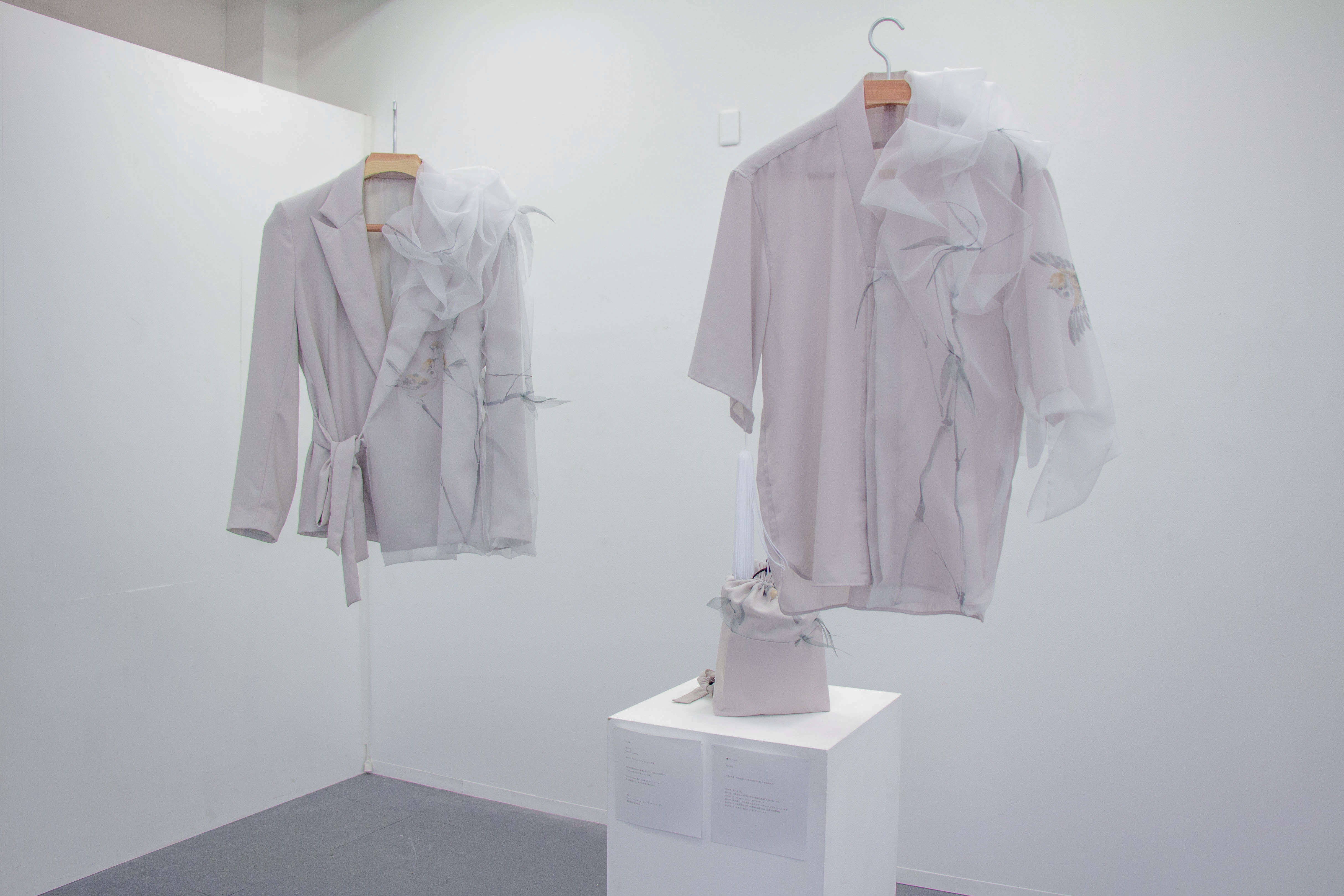
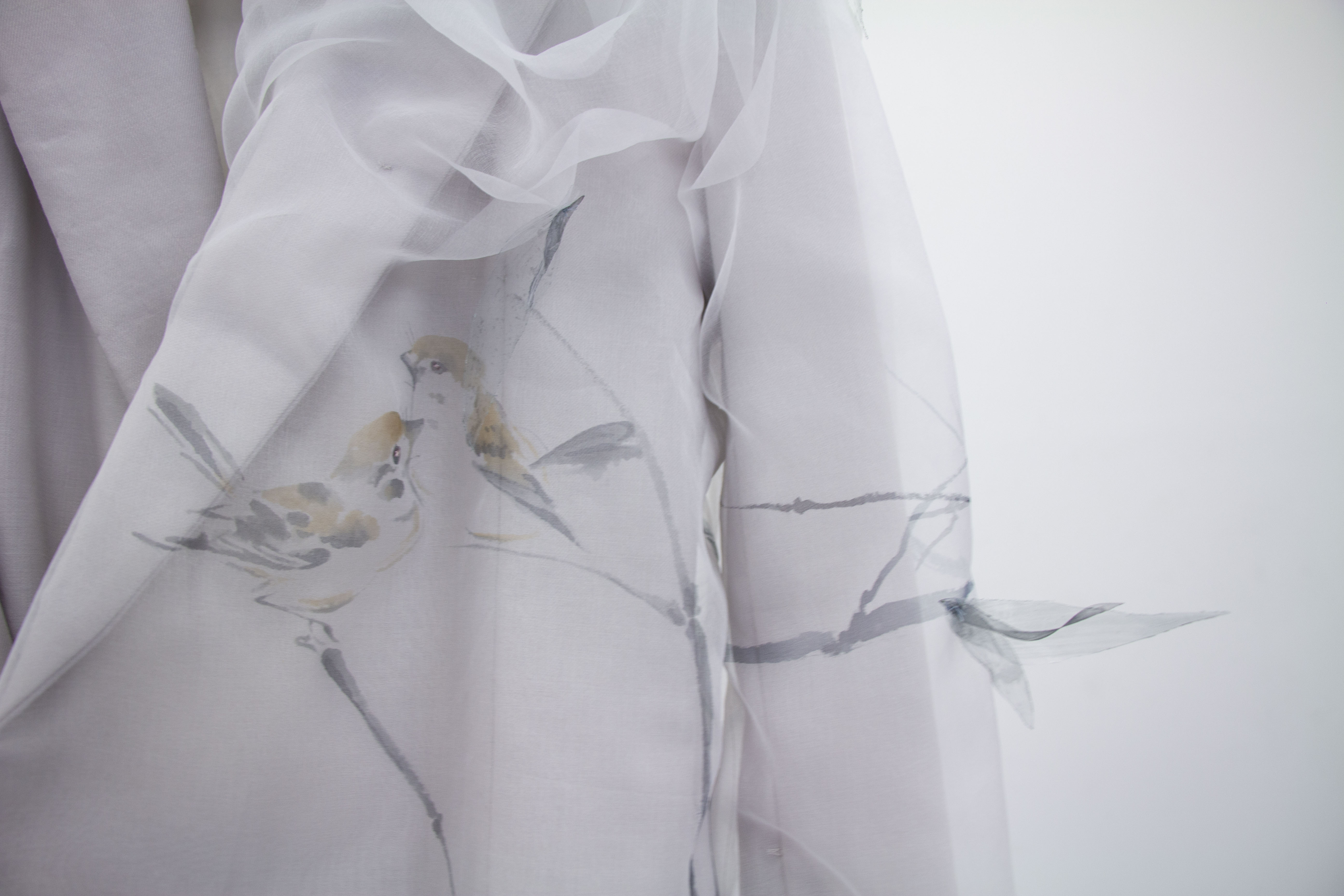
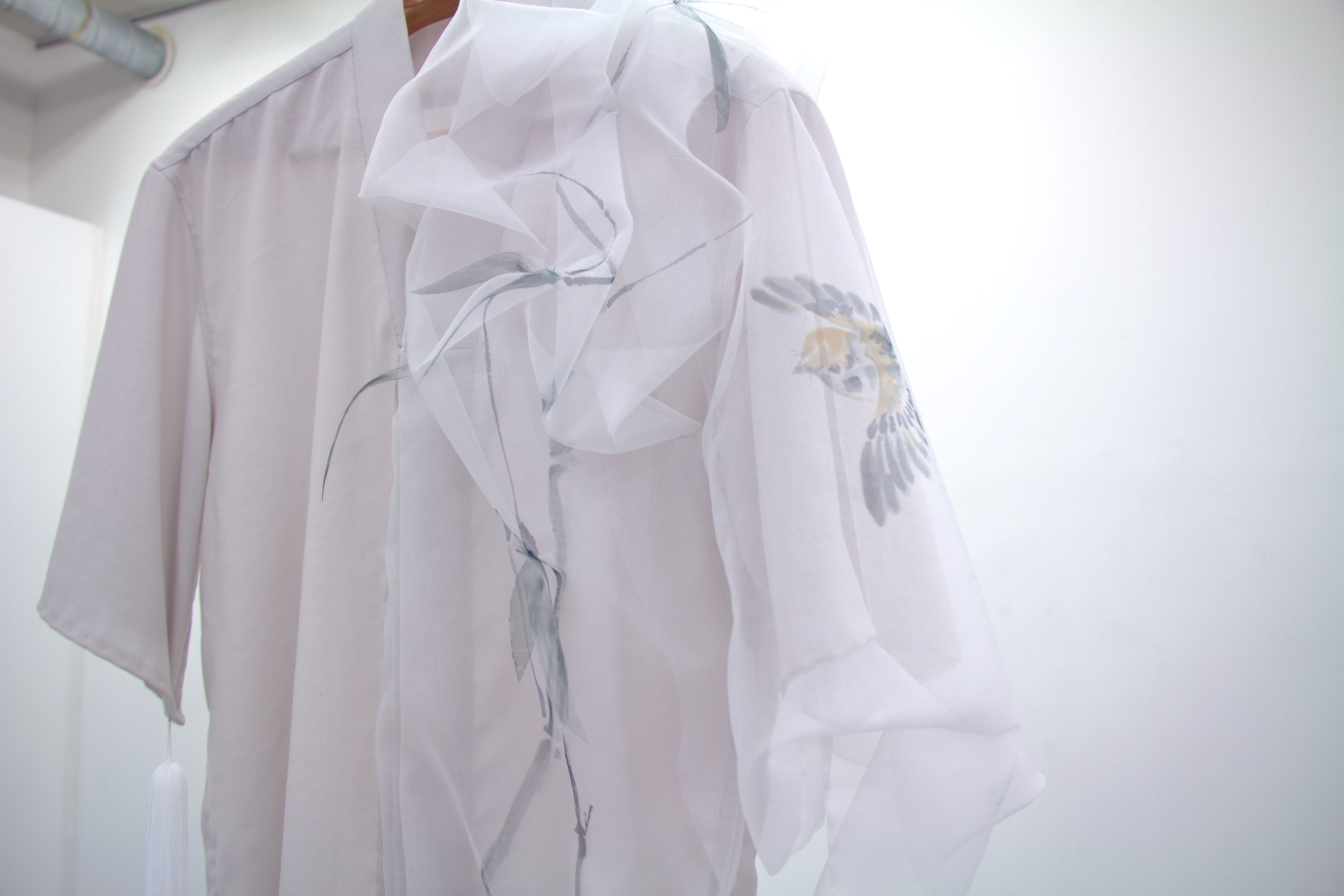
竹と雀をシルクオーガンジーに墨絵のように描き、生地を重ねることで平面の絵に奥行きを与えた。
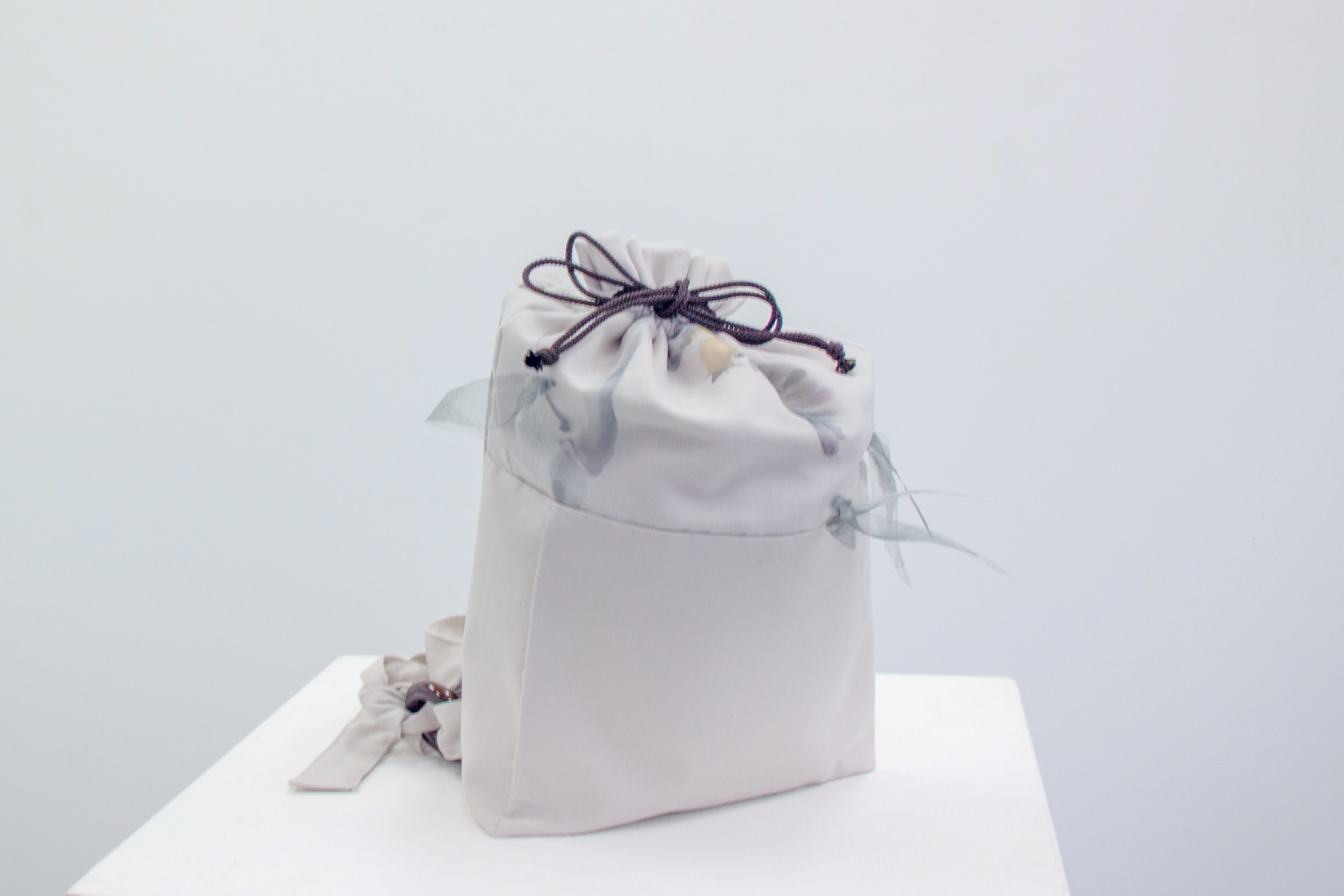
さらに笹の葉を後から縫い付けることで、モチーフが布から浮かび上がるような立体感を表現した。
平面に描いた絵を、生地の重なりや縫製によって立体へ変化させることで、伝統的な「竹に雀」の図案に新しい表現を加え、失われた日常への願いを形にした。
素材 | ウール、シルクオーガンジー、ポリエステルオーガンジー
染色 | 直接染料、ポリロン染料
In 2020, due to the spread of the novel coronavirus, we continued to live our lives avoiding contact with others and limiting our outings.
We came to appreciate anew the importance of human interaction—which we had previously taken for granted—and the value of ordinary, everyday moments.
Hoping that the day would come when we could gather and interact with others as we once did, we imbued these feelings into the auspicious design known as “Bamboo and Sparrows.”
Bamboo and sparrows have long been depicted as an auspicious pairing. Because sparrows eat pests, they are also regarded as beings that ward off misfortune.
The bamboo and sparrows were drawn on silk organza in a style reminiscent of ink wash painting, and depth was added to the two-dimensional design by layering the fabric.
Furthermore, by sewing bamboo leaves onto the fabric afterward, a three-dimensional effect was created, making the motifs appear to float off the fabric.
By transforming a two-dimensional painting into a three-dimensional form through the layering of fabric and stitching, the artist added a new expression to the traditional “Bamboo and Sparrows” motif, giving tangible form to a longing for a lost sense of everyday life.
Material | Wool, silk organza, polyester organza
Dyeing | Direct dyes, polyron dyes